
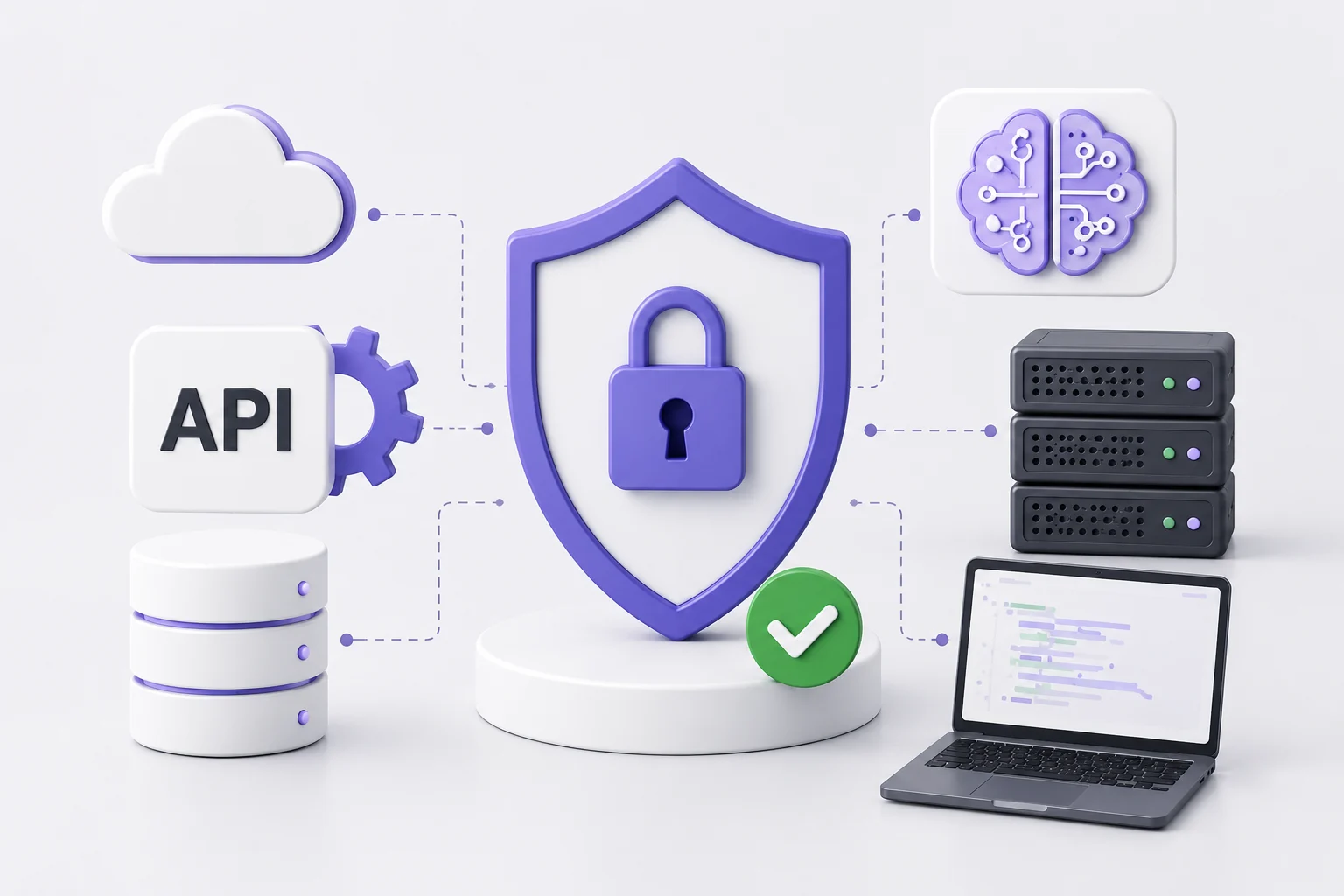
Modern enterprise applications rely heavily on interconnected Application Programming Interfaces (APIs) and automated Artificial Intelligence (AI) workflows to deliver real-time, dynamic user experiences. As organizations embed machine learning models and large language models directly into their software architectures, the attack surface expands significantly. Security can no longer be treated as a final checklist item or isolated to network firewalls. Modern full-stack development requires an end-to-end security framework that protects data in transit, at rest, and during model processing.
Building resilient enterprise applications demands proactive design, threat modeling, and robust guardrails across every layer of the technology stack. Implementing comprehensive enterprise application security Dallas TX strategies ensures that critical business platforms remain fully protected against evolving cyber threats.
By leveraging specialized API security services Dallas TX providers deliver, companies can fortify their core data infrastructure, secure model processing pipelines, and maintain strict compliance while continuing to innovate at scale. Prioritizing Secure Software Development Dallas frameworks empowers tech leaders to mitigate risks, safeguard sensitive customer datasets, and build long-term trust in complex digital ecosystems.
Securing the API Tier: The Gateway to Enterprise Data
APIs serve as the foundational pipelines for modern web and mobile applications, enabling seamless interaction between user interfaces, cloud databases, and third-party services. However, exposed or misconfigured API endpoints remain a prime target for cyber threats. Implementing strict security controls across all application interfaces is essential.
Modern Authentication and Authorization
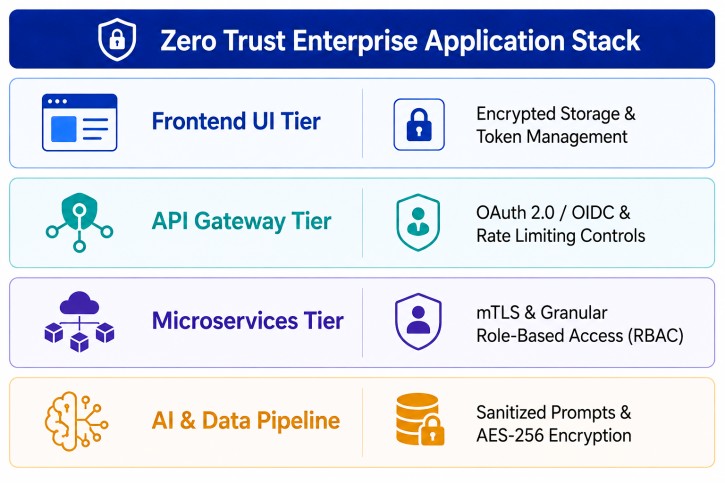
Legacy token methods and basic authentication are insufficient for enterprise-grade applications. Organizations should implement modern identity protocols such as OAuth 2.0 paired with OpenID Connect (OIDC) to verify identities and manage access tokens securely.
Furthermore, enforcing granular Role-Based Access Control (RBAC) or Attribute-Based Access Control (ABAC) ensures that authenticated users and external services only access the precise data resources required for their role.
Rate Limiting and Dynamic Throttling
To mitigate Denial of Service (DoS) attacks, automated brute-force attempts, and API scraping, full-stack engineers must implement rate limiting and throttling policies.
Using API gateways (such as AWS API Gateway, Kong, or Apigee), development teams can restrict query volumes based on IP addresses, user accounts, or API keys. Dynamic throttling automatically adjusts access limits during unexpected traffic spikes to maintain core platform stability.
Strict Input Validation and Schema Enforcement
Injection attacks, including SQL injection and command injection, frequently exploit unvalidated API payloads. Enforcing strict schema validation at the gateway level ensures incoming JSON or XML requests conform strictly to expected data types, formats, and parameter boundaries before reaching backend microservices.
Fortifying AI Workflows and Machine Learning Pipelines
Integrating artificial intelligence and automated decision engines introduces unique security challenges that traditional web security measures do not fully address. AI workflows process massive volumes of sensitive business data, making data integrity and model security top operational priorities.
Protecting the AI Data Pipeline
AI models are only as reliable as the data used to train and run them. Insecure data pipelines risk exposure to data poisoning, where malicious actors inject corrupt or biased data into training sets to manipulate model outputs.
Enterprise development teams must implement strict data lineage tracking, cryptographic hashing, and automated data sanitization routines. Encrypting data both in transit (using TLS 1.3) and at rest (using AES-256) across data lakes and vector databases is mandatory.
Preventing Prompt Injection and Model Exploitation
For enterprise apps leveraging large language models (LLMs) and generative AI features, prompt injection presents a major vulnerability. Attackers construct malicious inputs designed to bypass system rules, extract private training data, or execute unauthorized commands.
Securing AI workflows requires implementing strict input-output guardrails, using dedicated validation layers to sanitize user prompts, and restricting AI models from executing autonomous code without explicit user confirmation.
Model Governance and Output Sanitization
AI outputs should never be trusted implicitly. Enterprise architectures must treat model generation as untrusted user input, passing all responses through sanitization layers before rendering them on frontend dashboards or passing them to downstream databases.
Maintaining audit logs of model queries, parameters, and generated responses ensures full traceability for operational compliance and threat detection.
Implementing Zero Trust Across Full-Stack Architecture
Adopting a Zero Trust security architecture (the principle of “never trust, always verify”) ensures that security controls operate at every tier of the application stack, rather than relying solely on perimeter defenses.
Microservices Isolation and Service-to-Service Encryption
In cloud-native microservices architectures, internal communication between services must be secured. Implementing Mutual TLS (mTLS) inside service meshes (such as Istio or Linkerd) ensures all backend traffic between APIs, background workers, and AI inference engines is encrypted and authenticated.
Continuous Threat Monitoring and DevSecOps Integration
Security cannot remain an afterthought at the end of a release cycle. Integrating automated security scanners, Static Application Security Testing (SAST), Dynamic Application Security Testing (DAST), and dependency vulnerability auditing directly into Continuous Integration and Continuous Deployment (CI/CD) pipelines helps engineering teams capture vulnerabilities early in development.
Strategic Software Engineering with CAT Software Services Inc
Securing complex enterprise applications requires deep technical knowledge, proactive architecture design, and experienced engineering execution. Navigating the evolving security standards for APIs, cloud infrastructure, and AI technologies can strain internal resources and slow product delivery.
CAT Software Services Inc serves as a strategic software development partner for businesses, enterprises, and tech founders looking to build, scale, and secure modern digital applications. With expertise spanning custom software development, cloud-native architecture, API engineering, legacy system modernization, and secure AI integration, CAT Software Services Inc seamlessly integrates with your organization.
Our engineering teams prioritize security-first development practices, helping you design resilient API endpoints, fortify AI data pipelines, and maintain strict compliance standards without sacrificing development velocity. Whether you are launching a new enterprise platform or upgrading legacy systems, CAT Software Services Inc delivers scalable, high-performance software engineered to protect your business assets.
Frequently Asked Questions
What is the primary security risk associated with enterprise APIs?
The most common enterprise API security risks include Broken Object Level Authorization (BOLA), weak authentication, excessive data exposure, and lack of rate limiting. BOLA occurs when an API endpoint does not properly validate whether an authenticated user has permission to access specific resource objects, potentially exposing sensitive business records.
How does prompt injection impact generative AI security in business applications?
Prompt injection occurs when an attacker crafts input designed to override the system instructions of an AI model. In enterprise applications, this can lead to unauthorized data disclosure, generation of harmful responses, or unintended execution of backend workflows connected to the AI agent.
Why is mTLS important for microservices and AI workflows?
Mutual TLS (mTLS) ensures two-way authentication between microservices and application components. By encrypting internal communications and verifying identities at both ends of a connection, mTLS prevents unauthorized service access, eavesdropping, and man-in-the-middle attacks within private cloud environments.
How can companies secure AI models against data poisoning?
Securing AI models against data poisoning requires implementing strict data governance practices. This includes vetting data sources, maintaining cryptographic data hashes to detect unauthorized modifications, conducting regular data audits, and isolating training environments from untrusted networks.
How does CAT Software Services Inc incorporate security into the development lifecycle?
CAT Software Services Inc follows a DevSecOps approach, embedding automated vulnerability scanning, secure code reviews, role-based access design, and data encryption protocols directly into the agile software development lifecycle. This ensures applications are secure by design from initial architecture to cloud deployment.
Safeguarding Your Enterprise Digital Assets
As enterprises accelerate adoption of cloud platforms, microservices, and AI features, security must keep pace with technological innovation. Securing modern applications requires unified protection strategies across API endpoints, data processing layers, and machine learning models. By embedding continuous security controls and zero-trust principles into your full-stack architecture, your organization can protect critical enterprise data while delivering fast, reliable user experiences.
Ready to strengthen your application security posture and build enterprise-grade digital solutions? Partner with leading experts in enterprise application security Dallas TX organizations trust at CAT Software Services Inc today to discuss your software architecture and security roadmap.
