
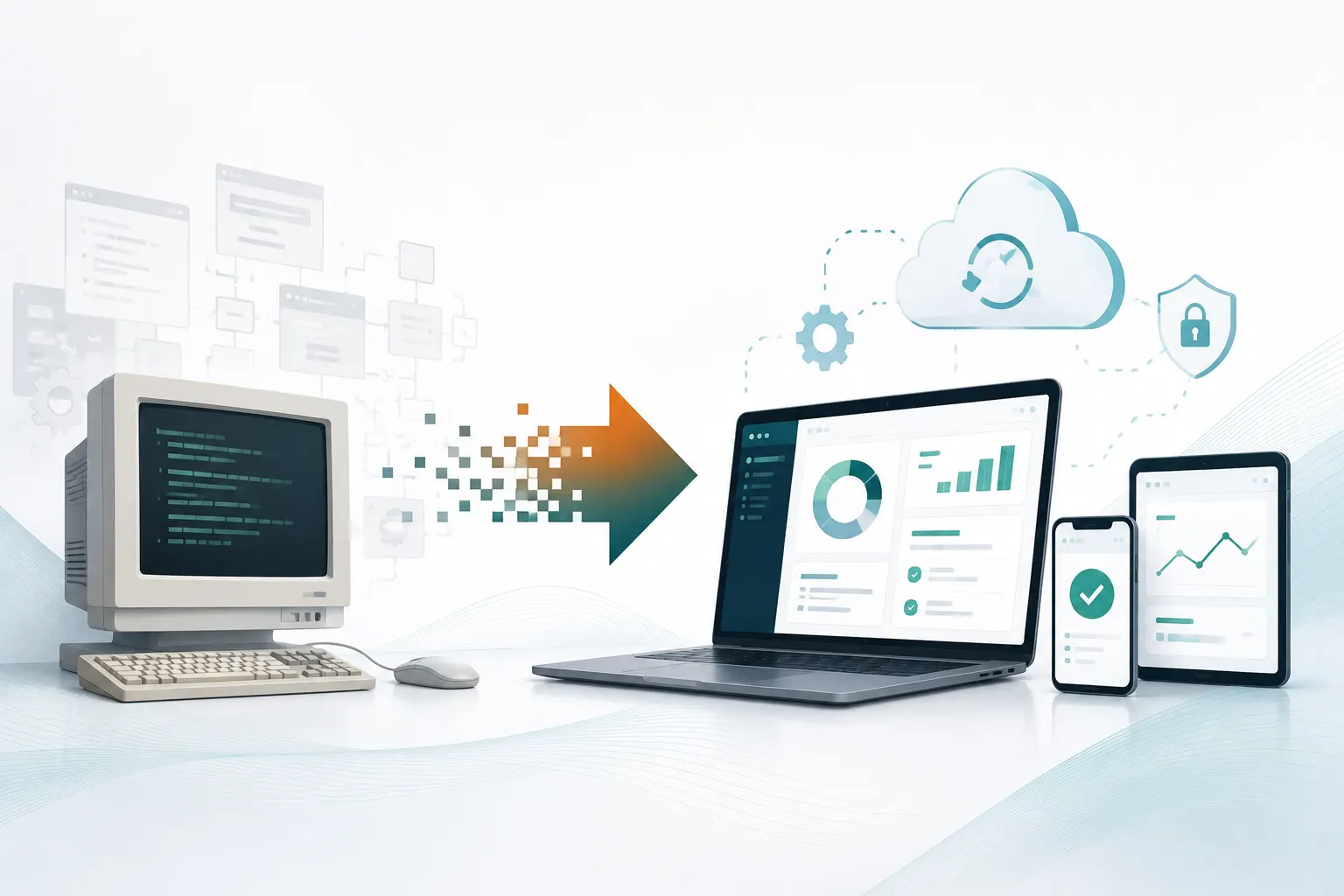
Enterprise software architectures that once drove market leadership can gradually turn into major operational bottlenecks. Legacy core systems, built on outdated technologies and monolithic frameworks, frequently struggle to handle modern transactional volumes, security threats, and third-party integrations. For growing enterprises, total system replacement often carries unacceptably high risks, steep financial costs, and severe business disruption.
Strategic full-stack refactoring offers a controlled, high-value alternative to full system rewrites. Rather than tearing down established business logic, engineering teams systematically modernize frontend user interfaces, backend API layers, and data infrastructure. Executing targeted legacy application modernization Austin TX strategies allows organizations to eliminate technical debt while maintaining total operational continuity.
By partnering with specialized legacy system refactoring Austin TX engineers, growing platforms can transform monolithic software into cloud-native architectures. Incorporating modern Full Stack Development Services Austin businesses rely on ensures your software scales effortlessly, lowers maintenance overhead, and unlocks long-term agility.
The Hidden Costs of Aging Enterprise Architectures
Maintaining legacy applications creates compound liabilities across financial, technical, and operational dimensions. While older systems may appear functional on the surface, their underlying technical debt quietly erosion profitability and competitiveness.
Escalating Maintenance Expenses
Legacy codebases demand excessive time and budget simply to maintain baseline stability. Outdated frameworks, deprecated libraries, and unoptimized database queries require continuous troubleshooting, reducing the resources available for strategic product development.
Innovation Bottlenecks and Slow Deployment
Monolithic applications usually feature tightly coupled components where a single code modification risks cascading system failures. This tight coupling slows release velocity, prevents rapid deployment of new customer features, and delays critical business initiatives.
Heightened Security Risks
Aging enterprise frameworks frequently lack native support for modern identity protocols, granular encryption, and zero-trust security standards. Patching legacy systems against evolving cybersecurity threats becomes increasingly difficult, exposing core operational assets to operational vulnerabilities.
Core Pillars of Full-Stack System Refactoring
Successful legacy modernization requires an end-to-end strategy that addresses every tier of the technology stack. Incremental, full-stack refactoring aligns modern software design with clear strategic outcomes.
1. Backend Decoupling and Microservices Transition
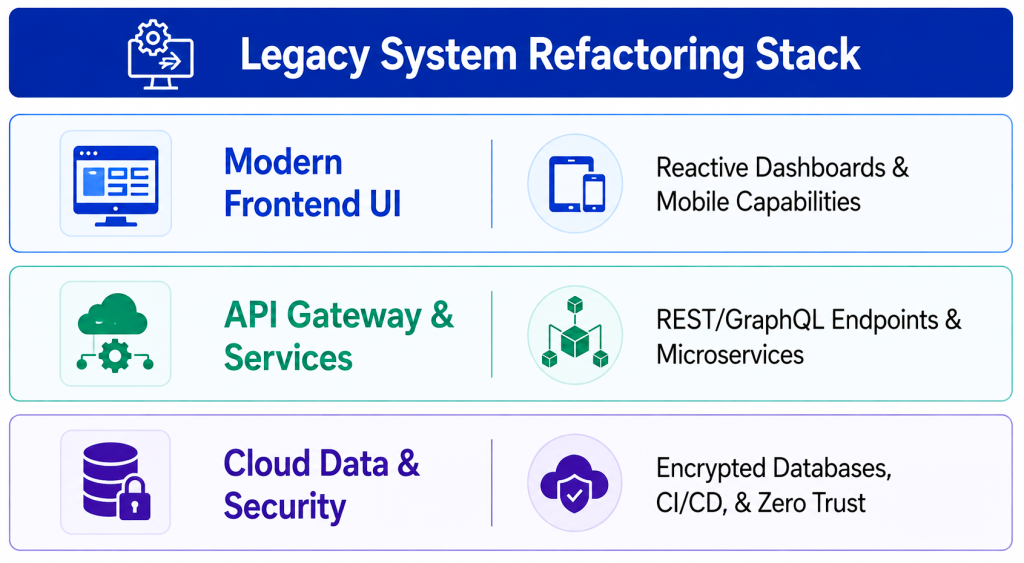
Modernization starts by breaking apart rigid backend monoliths into modular, cloud-native microservices. By organizing services around specific business domain boundaries, engineering teams isolate core business functions into independent microservices.
This modular approach ensures that high-volume operations can scale without consuming unnecessary resources across unrelated system functions. Deploying microservices inside containers managed by orchestrators like Kubernetes enables automated resource scaling, fault isolation, and uninterrupted application uptime.
2. API Gateway and Service Layer Optimization
Legacy systems often rely on proprietary protocols or unstandardized data formats that impede external system integration. Refactoring backend connectivity through structured API gateways, RESTful endpoints, or GraphQL layers establishes clean communication protocols across application services.
An optimized API layer enables secure data exchange between internal systems, modern mobile interfaces, and third-party SaaS tools. Implementing centralized authentication, rate limiting, and dynamic caching at the gateway level significantly boosts overall platform performance.
3. Frontend Modernization and User Experience Alignment
User expectations for web and mobile software interfaces have evolved dramatically. Outdated, non-responsive user interfaces create user friction, increase onboarding timelines, and lower employee productivity.
Refactoring the presentation layer with lightweight, modern frameworks like React, Vue.js, or cross-platform mobile tools transforms heavy desktop interfaces into responsive, intuitive dashboards. Separating the frontend UI from backend business logic allows design teams to improve user experiences without altering underlying transactional processing.
4. Database Optimization and Pipeline Modernization
Legacy databases frequently suffer from rigid schema structures, unindexed queries, and poor concurrency handling under heavy throughput. Refactoring data layers involves decomposing monolithic databases into specialized SQL or NoSQL storage engines optimized for specific workload demands.
Establishing automated, real-time data pipelines ensures seamless synchronization between operational transactional databases and business intelligence systems. Encrypting data at rest and in transit maintains continuous compliance with modern enterprise data privacy regulations.
Strategic Blueprint for Risk-Free Refactoring
Refactoring complex enterprise software requires a structured, phased methodology to prevent service disruptions and preserve continuous operational stability.
- Thorough Codebase Auditing: Map system dependencies, quantify technical debt, and identify high-risk components before modifying production code.
- Adopt the Strangler Fig Pattern: Gradually replace legacy modules with modern microservices until the old system can be safely decommissioned.
- Implement Automated Testing Frameworks: Deploy comprehensive integration, unit, and end-to-end test suites within automated CI/CD pipelines to catch regressions early.
- Enforce Zero-Trust Security Protocols: Integrate strict authentication protocols, token validation, and mutual TLS encryption across every refactored service layer.
Driving Business Growth with CAT Software Services Inc
Modernizing legacy applications demands experienced engineering leadership, precise execution, and deep technical domain knowledge. Attempting full-stack refactoring without specialized technical expertise risks project delays, budget overruns, and operational downtime.
CAT Software Services Inc acts as a strategic technology development partner for enterprises, mid-market companies, and technology leaders seeking to modernize critical digital platforms. With proven expertise spanning custom software development, cloud computing, API engineering, and full-stack legacy refactoring, CAT Software Services Inc seamlessly integrates with your internal teams.
Our engineering specialists analyze your software ecosystem, identify architecture bottlenecks, and execute targeted refactoring roadmaps without interrupting day-to-day operations. Whether you need to decouple a monolithic application, migrate backends to cloud-native platforms, or redesign enterprise user experiences, CAT Software Services Inc delivers scalable software solutions built for long-term growth.
Frequently Asked Questions
What is full-stack refactoring, and how does it differ from a complete rewrite?
Full-stack refactoring systematically updates an application’s internal structure, backend architecture, and user interface without changing its core functional behavior. Unlike a complete system rewrite, refactoring preserves existing business logic, minimizes implementation risks, and allows continuous deployment during modernization.
How do companies decide between refactoring and rebuilding a legacy application?
Companies choose refactoring when the underlying core business logic is sound, but performance, security, and scalability are hindered by outdated technology stack components. Rebuilding is typically reserved for platforms where the original system architecture is completely unsuited for modern business demands.
Will legacy system refactoring disrupt daily business operations?
When executed using incremental modernization methodologies like the Strangler Fig pattern, refactoring causes minimal disruption. Modern services are introduced alongside legacy components, diverting traffic smoothly to new modules without forcing system downtime or interrupting user workflows.
How long does an enterprise full-stack refactoring project typically take?
Project timelines vary based on system complexity, technical debt, and team size. Phased full-stack refactoring projects usually deliver initial modernized components within three to six months, with full application refactoring occurring systematically over several iterative release cycles.
How does CAT Software Services Inc assist with legacy application refactoring?
CAT Software Services Inc provides specialized software engineering teams that conduct comprehensive code audits, design cloud-native architectures, modernize frontend and backend systems, and implement robust security protocols to help enterprises achieve operational agility.
Transforming Legacy Code into Strategic Enterprise Value
Legacy applications do not need to limit your organization’s technical capability or slow your market response time. Through strategic full-stack refactoring, enterprises can lower software maintenance overhead, strengthen security frameworks, and establish scalable cloud foundations. Modernizing your software architecture protects prior digital investments while equipping your organization to capture new digital growth opportunities.
Ready to eliminate technical debt and modernize your software infrastructure? Partner with the proven experts in legacy application modernization Austin TX enterprises trust at CAT Software Services Inc to accelerate your enterprise modernization strategy.
