
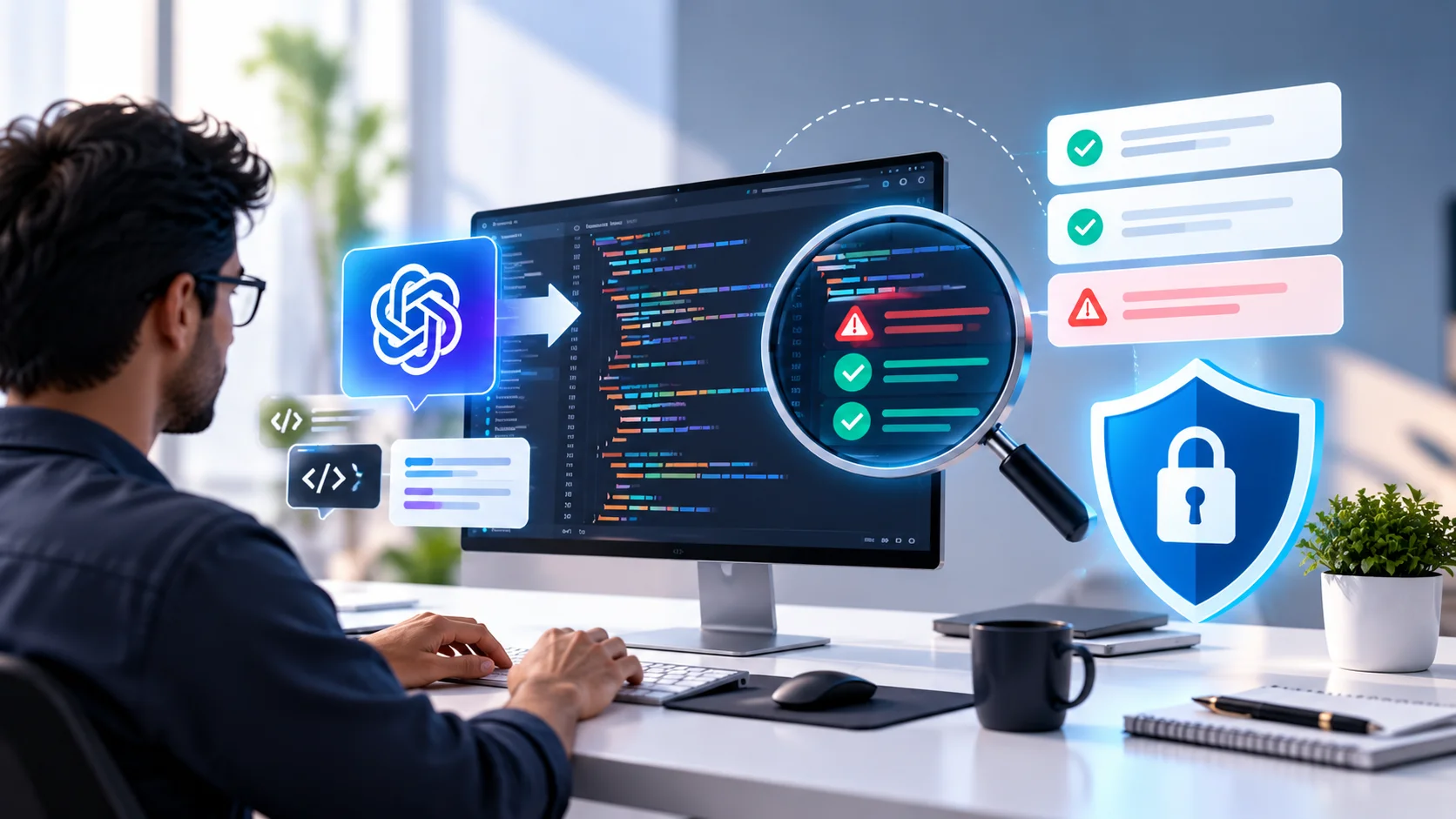
The software development market is shifting. Across technology hubs like Princeton, New Jersey, teams are embracing vibe coding services Princeton. Instead of writing every line of syntax by hand, engineering leads and product managers guide AI models through natural language prompts. This direction allows teams to focus on intent, user experience, and business logic while generative tools handle boilerplate code.
While this conversational approach accelerates prototyping, local businesses quickly realize that moving from a chat prompt to a secure production environment requires guardrails. Unchecked AI-generated code introduces hidden vulnerabilities, compliance blind spots, and architectural debt. Finding the balance between velocity and security is the defining challenge for regional tech leaders today. Learn more about successful methods in our enterprise AI development Princeton NJ.
What is Vibe Coding and Why Is It Trending?
Vibe coding represents a rethinking of how software concepts come to life. Rather than spending weeks configuring repository structures and syntax rules, developers act as conductors, orchestrating multiple AI agents to build functional applications in real time. The appeal is straightforward: speed, agility, and a lower barrier to entry for building minimum viable products.
For growing organizations, this capability means internal tools, customer dashboards, and workflow automations can be built and deployed in days rather than quarters. However, treating AI outputs as production-ready without validation is a recipe for disaster. Speed must not outpace security, especially when handling sensitive customer data or core financial systems.
The Hidden Risks of Unmanaged AI Development
Relying solely on conversational prompts without proper oversight introduces several critical risks for corporate IT ecosystems.
- Security Vulnerabilities: AI models frequently reproduce insecure coding patterns, outdated cryptographic methods, or unvalidated input pathways found in their training data.
- Compliance Failures: Automated code generation tools rarely account for industry-specific regulations like SOC 2, HIPAA, or ISO/IEC 27001 standards unless explicitly configured.
- Architectural Inconsistency: Piecemeal prompt outputs often lack unified design patterns, leading to fragmented microservices and difficult maintenance cycles down the road.
To capture the benefits of conversational development without exposing the business to systemic risk, enterprises need a structured framework that combines AI agility with seasoned engineering oversight.
Building a Safe Framework for AI-Assisted Engineering
Safely harnessing the power of prompt-driven development requires a blend of advanced tooling and human expertise. Organizations must treat AI as a junior assistant rather than an autonomous lead architect. Establishing rigorous code reviews, automated security scanning, and comprehensive testing pipelines ensures that every generated module meets strict quality benchmarks.
Furthermore, integrating these workflows with established cloud infrastructure and quality assurance processes guarantees long-term stability. This is where partnering with experienced technology providers becomes invaluable for regional enterprises aiming to scale securely.
Partnering for Scalable, Secure Innovation
Navigating the intersection of generative AI and enterprise software development demands technical mastery. Organizations looking to accelerate their digital roadmap can rely on trusted local experts. CAT Software Services Inc., based right in Princeton, New Jersey, specializes in bridging the gap between cutting-edge innovation and secure, production-ready execution.
Whether your team needs assistance with cloud-native application development, legacy system modernization, or rigorous QA and testing services, having a dedicated partner ensures your digital initiatives remain secure, compliant, and built for scale.
Frequently Asked Questions
What exactly is vibe coding in enterprise software development?
Vibe coding is a colloquial term for AI-assisted development where engineers guide software creation primarily through natural language prompts and high-level structural intent rather than manual coding.
Is AI-generated code secure enough for production environments?
Not automatically. AI-generated code can contain hidden security flaws or compliance gaps, which is why human code reviews, security scans, and professional QA testing are essential before deployment.
How can Princeton businesses integrate AI tools safely?
Local enterprises can partner with experienced technology firms like CAT Software Services Inc. to establish secure development pipelines, automated testing frameworks, and robust cloud architectures.
What are the main benefits of prompt-driven development?
It accelerates prototyping, reduces time-to-market for new features, and allows technical teams to focus heavily on high-level business logic and user experience.
How does CAT Software Services help companies scale their tech stack?
CAT Software Services provides comprehensive solutions including custom software development, cloud integration, legacy modernization, and application security to ensure long-term stability.
Charting Your Next Digital Milestone
The evolution of software engineering offers opportunities for businesses ready to embrace AI-driven software development NJ standards intelligently. By combining the speed of AI-driven ideation with strict security practices and expert engineering oversight, your organization can turn creative concepts into enterprise-grade assets safely.
Ready to transition your prototype into a secure production system? Consult our Princeton engineering team today.
