
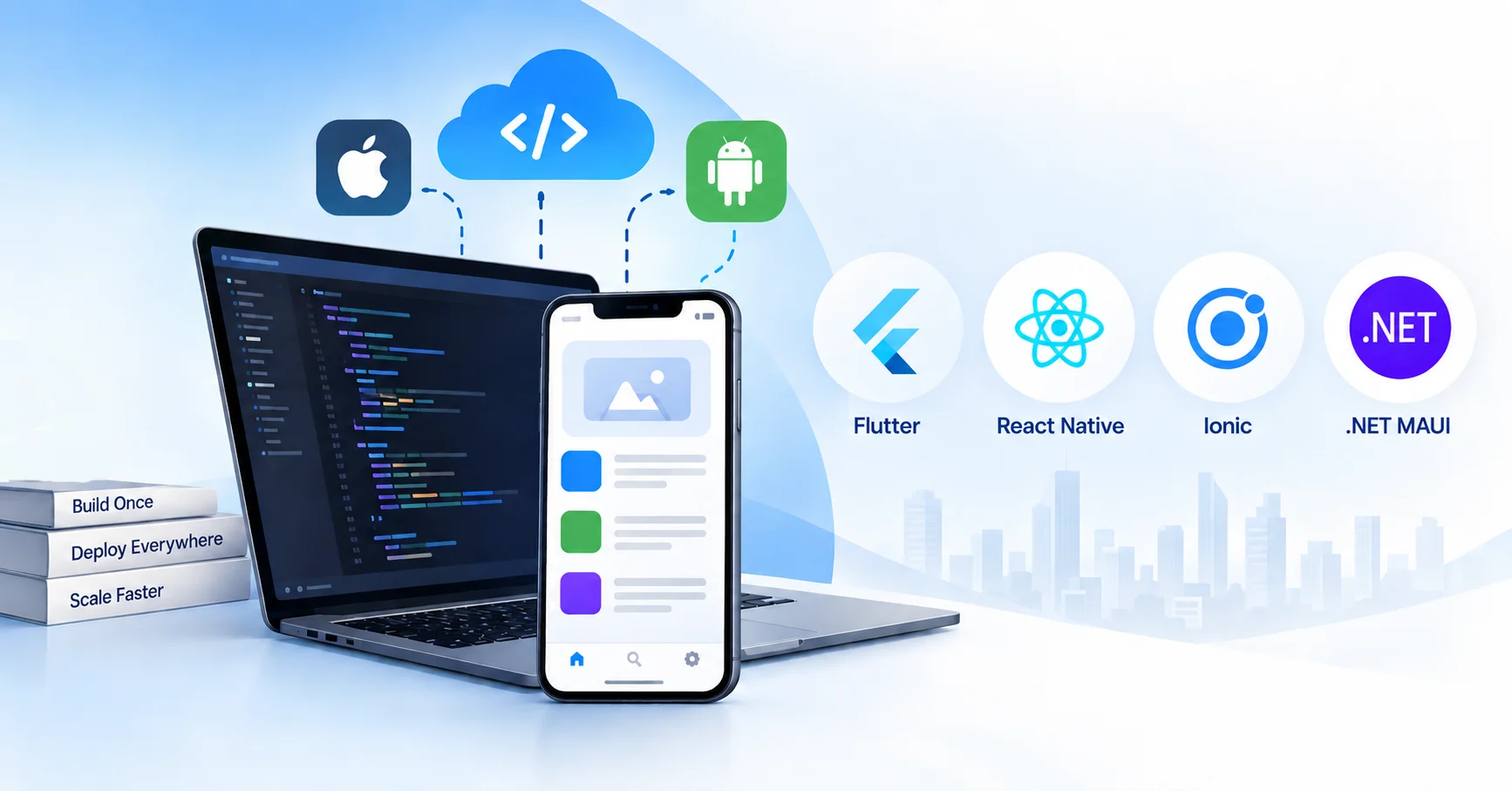
Modern businesses face a constant challenge in software strategy: delivering clean mobile experiences across multiple platforms without inflating budgets or timelines. Building separate native applications for iOS and Android often doubles development effort, resource allocation, and long-term maintenance costs. Partnering with top providers of hybrid mobile app development services princeton nj enterprises rely on gives local and national organizations the specialized engineering power needed to launch responsive, high-performing applications efficiently while maximizing code reusability across platforms.
Selecting the appropriate tech stack determines app performance, UI responsiveness, and overall maintenance complexity over the application’s lifecycle. Frameworks like React Native, Flutter, and Ionic bridge the gap between efficiency and user experience by combining web technologies with native container wrappers. Working alongside experienced cross platform app developers New Jersey businesses trust ensures your software architecture remains scalable, secure, and cost-effective across both iOS and Android ecosystems.
Why Hybrid App Development Makes Business Sense
Before selecting specific technical options, decision-makers must understand why cross-platform development has become a practical corporate strategy. Hybrid apps combine web technologies with native container wrappers, giving enterprise teams fast implementation capabilities alongside direct device API access.
Faster Time to Market
A single codebase reduces engineering cycles significantly. Features, security patches, and functional updates are built once and pushed simultaneously to the Apple App Store and Google Play Store.
Resource Efficiency
Maintaining specialized native teams for Swift and Kotlin requires higher capital investment. Hybrid development allows companies to maintain unified teams skilled in JavaScript, TypeScript, or Dart, improving operational balance.
Consistent Multi-Platform UX
Unified codebases keep design patterns, operational logic, and brand aesthetics uniform across varying screen sizes, OS guidelines, and hardware configurations.
Proven Frameworks for Hybrid Mobile Applications
Choosing the right technology stack depends on performance needs, existing team expertise, and long-term scaling requirements.
1. Flutter
Developed by Google, Flutter is a leading solution for building natively compiled, high-performance applications from a single code repository. Flutter uses the Dart programming language and skips traditional web wrappers entirely.
- Core Strengths: Fast graphic rendering, thanks to its internal Skia and Impeller engines, which draw UI widgets directly on the screen canvas.
- Native Feel: Offers rich libraries of customizable widgets that replicate material design and iOS aesthetics precisely.
- Developer Speed: Features stateful Hot Reload, enabling developers to view code modifications instantly without resetting app state.
- Ideal Use Case: Complex, visual-heavy enterprise applications requiring customized UI elements and smooth 60 FPS performance.
2. React Native
Backed by Meta, React Native remains one of the most widely adopted choices across global software engineering teams. It bridges JavaScript logic directly to native platform components, offering native-like performance while retaining web development speed.
- Core Strengths: Large open-source library ecosystem, massive community support, and straightforward integration with existing JavaScript architecture.
- Code Reusability: Allows engineering teams to share up to 90% of code between iOS and Android, while permitting custom native modules when needed.
- Modular Architecture: Enables developers to upgrade specific application components progressively without rebuilding the entire system.
- Ideal Use Case: Data-driven applications, e-commerce platforms, and scalable enterprise tools requiring real-time updates.
3. Ionic Framework
Ionic is an open-source UI toolkit that relies on standard web technologies such as HTML, CSS, JavaScript, and frameworks like Angular, React, or Vue. Combined with Capacitor or Cordova wrappers, Ionic builds cross-platform mobile, web, and desktop applications.
- Core Strengths: Complete framework independence, allowing teams to utilize their existing frontend stack without relearning core concepts.
- Web First Approach: Practical for companies looking to transform an existing web platform into a functional mobile application quickly.
- Cost Savings: Cuts initial development timelines by reusing web assets and standardized UI components.
- Ideal Use Case: Minimum Viable Products (MVPs), internal workforce tools, and content-centric applications prioritizing speed to market.
4. Xamarin / .NET MAUI
For organizations heavily invested in Microsoft enterprise systems, .NET MAUI (the evolution of Xamarin) offers a structural cross-platform development architecture. It enables C# developers to build native mobile and desktop interfaces using unified .NET libraries.
- Core Strengths: Strong typing, structured security, and smooth cloud integration within Microsoft Azure environment networks.
- Native Performance: Accesses native hardware APIs directly through C# wrappers, offering high computational stability.
- Unified Tooling: Integrates directly with Visual Studio, simplifying testing, deployment, and backend pipeline management.
- Ideal Use Case: Enterprise applications requiring strict data security, backend integration with C# ecosystems, and long-term stability.
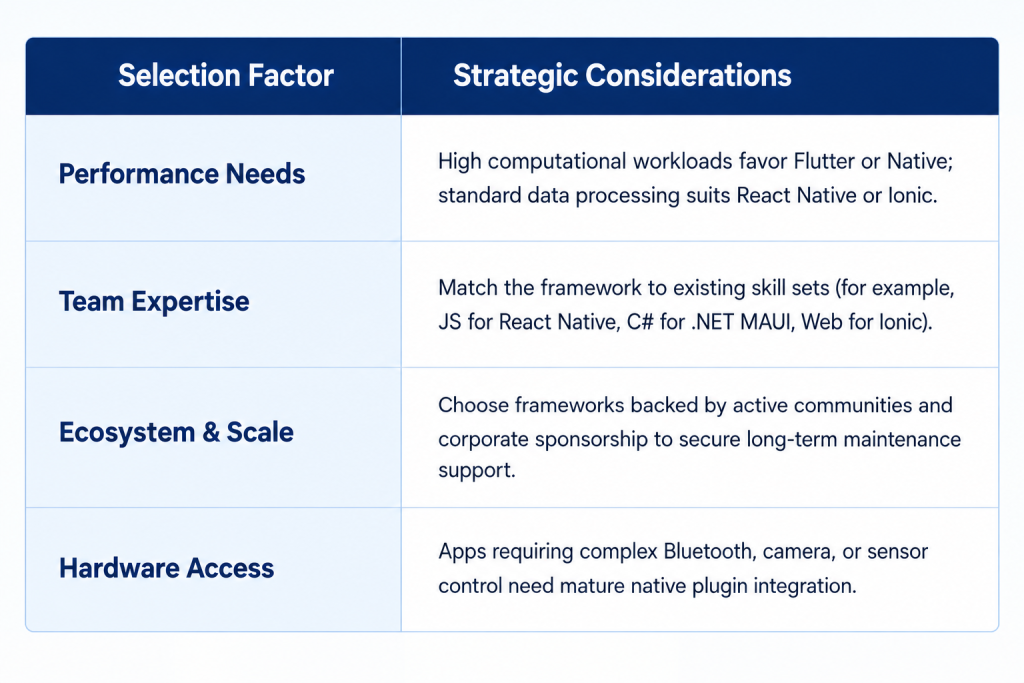
Technical Framework Selection Factors
Selecting a framework requires measuring organizational goals against technical requirements. No single tool fits every corporate scenario. Strategic decision-makers can review the following parameters:
FAQs
What is the main difference between hybrid and native app development?
Native app development uses platform-specific languages (Swift for iOS, Kotlin for Android), yielding maximum hardware performance at higher initial costs. Hybrid app development uses a single framework to write one codebase across both platforms, reducing build time and capital investment.
Is app performance comparable between hybrid and native frameworks?
Modern hybrid frameworks like Flutter and React Native offer performance that is virtually indistinguishable from native apps for standard business applications. However, graphic-intensive mobile games or heavy local processing systems still benefit from native development.
How much development time can cross-platform hybrid frameworks save?
By maintaining a single unified codebase, development teams typically reduce overall engineering effort and project timelines by 30% to 50% compared to building two separate native applications.
Can an existing web application be converted into a hybrid mobile app?
Yes. Frameworks such as Ionic and React Native allow developers to package existing web logic, components, and design systems into mobile wrappers, accelerating product launches.
Which hybrid framework offers the strongest long-term stability?
React Native and Flutter maintain strong long-term stability due to active support from Meta and Google respectively. Selecting a framework supported by major tech organizations helps protect long-term plugin compatibility and security updates.
Building Scalable Mobile Architecture with CAT Software Services Inc
Navigating cross-platform mobile software requires balancing immediate deployment speed with long-term system stability. Choosing the correct hybrid app framework allows businesses to reach customers across platforms efficiently while keeping engineering overhead predictable.
At CAT Software Services Inc, our seasoned team of cross platform app developers New Jersey firms rely on builds custom cross-platform applications suited to precise business requirements. Whether you are looking for dedicated React Native app development services Princeton support or full lifecycle mobile execution, we deliver resilient, high-performing software platforms.
Ready to launch your cross-platform mobile application? Partner with the industry leaders in hybrid mobile app development services princeton nj organizations trust at CAT Software Services Inc. Share your mobile application requirements with our team today to review project architecture options and establish a clear development plan.
