
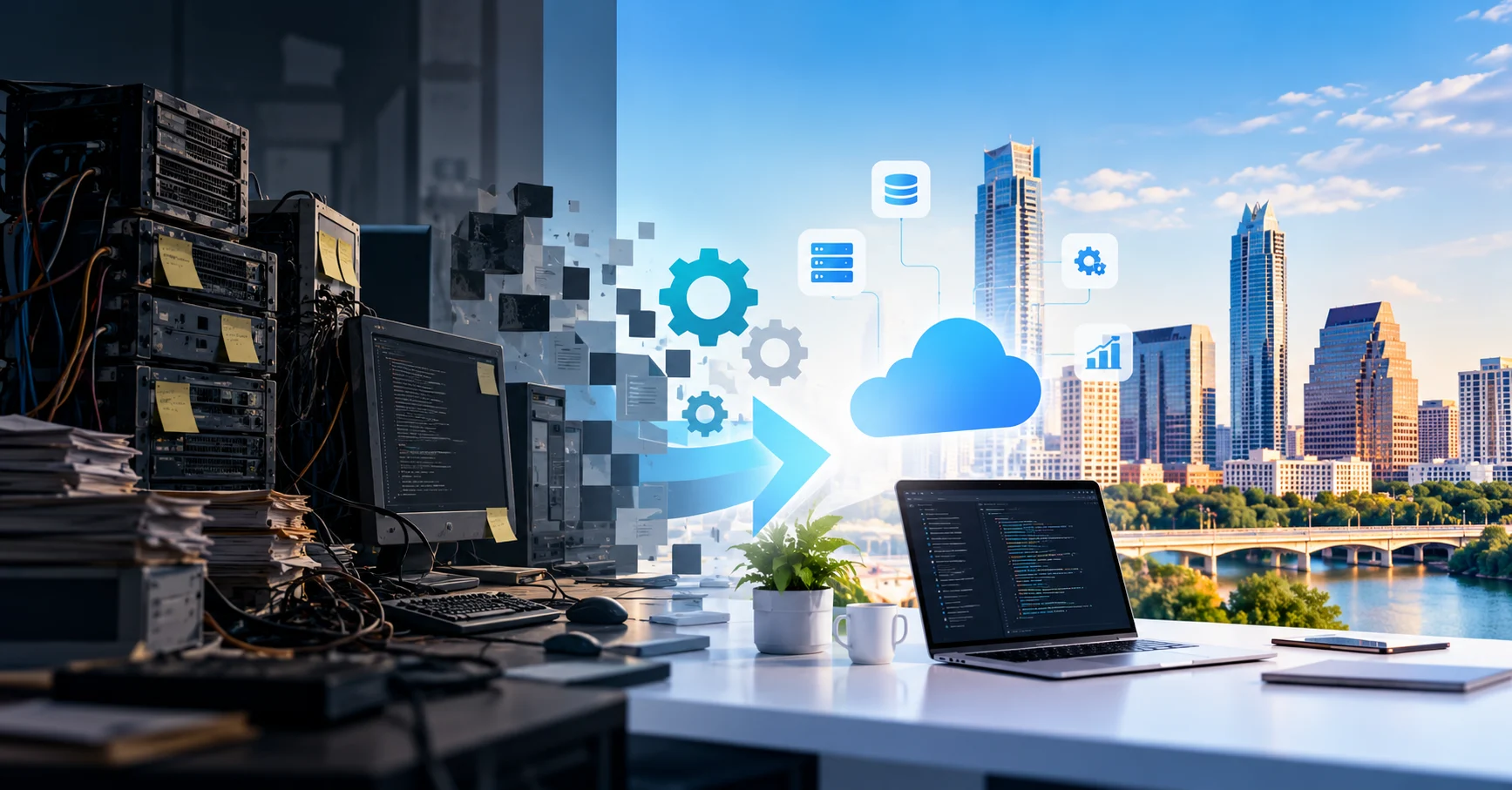
Central Texas continues to grow as a major hub for innovation, logistics, and corporate enterprise. Technology leaders working in this region face a direct mandate. Local markets turn more competitive by the day, meaning internal systems must keep pace with business growth. Outdated legacy applications quickly become bottlenecks. They drain valuable engineering hours and slow product delivery.
Chief Technology Officers face a constant balancing act between immediate project demands and long-term system health. Moving away from rigid software requires a deliberate plan. Modernizing an application is not about rewriting code for novelty. It is a business decision meant to improve flexibility, reduce technical debt, and build a solid foundation for future growth.
The True Cost of Technical Debt
Every software system accumulates technical debt over time. Patches, quick fixes, and temporary integrations pile up until standard maintenance consumes the majority of engineering bandwidth. When development teams spend most of their cycles fighting fires, innovation stalls.
Fast business environments suffer when this lag hits market responsiveness. If shipping a routine feature takes weeks instead of days because of brittle code, competitors win the advantage. Talent retention also drops. Skilled engineers prefer working with clean architectures instead of maintaining aging monoliths. Fixing these structural flaws revitalizes team morale and speeds up release cycles.
Strategic Pathways to Modernization
Updating existing software requires a structured plan. Not every application needs a complete ground-up rewrite. Depending on business priorities, technology leaders typically choose among four core transformation paths:
- Refactoring and Optimization: Improving internal code structures without changing external behavior to boost maintainability and performance.
- UI and UX Overhauls: Refreshing front-end interfaces to improve user satisfaction and simplify daily workflows.
- Cloud Migration: Shifting workloads to secure cloud environments to balance resource use and support flexible scaling.
- Microservices Decomposition: Breaking monolithic applications into smaller, independent services to enable faster, isolated releases.
Working with an experienced engineering team helps organizations figure out which systems need deep architectural changes and which need simple refactoring. CAT Software Services Inc specializes in matching custom software solutions with specific enterprise goals, so every modernization dollar delivers measurable operational value.
Aligning Architecture with Regional Growth
Businesses scaling across competitive hubs need reliable systems and smooth integrations. Whether unifying customer data or automating internal tasks, custom software bridges the gap between separate business units. Applications designed with modular layouts connect easily with existing enterprise resource planning platforms, customer relationship management tools, and third-party APIs.
Engineering leaders also prioritize strong security frameworks and compliance standards from day one. Moving to protected cloud environments guards sensitive data while keeping services online for users. By setting up automated delivery pipelines and strict testing protocols, technology teams can ship updates frequently and safely.
Frequently Asked Questions
What is the first step in planning a software modernization project?
The initial phase involves a complete audit of existing systems to identify performance bottlenecks, security vulnerabilities, and high-maintenance code modules. Establishing clear business goals dictates whether to refactor, replatform, or rebuild.
How long does a typical software modernization initiative take?
Timelines vary widely based on application scale and complexity. Smaller refactoring projects may take a few weeks, while enterprise cloud migrations and microservices transitions can span several months. Phased rollouts help minimize operational disruption.
Should we completely rewrite our legacy application?
Not always. A full rewrite carries high risk and cost. Often, strategic refactoring combined with targeted API integrations provides a faster return on investment than starting from scratch.
How do we protect business continuity during the transition?
Using a phased migration strategy allows core systems to remain operational while new components are built, tested, and validated in parallel. Clear milestones and continuous monitoring prevent unexpected downtime.
How does custom software modernization impact operational costs?
While modernization requires an upfront investment, it significantly reduces long-term maintenance overhead, hosting expenses, and resource waste by automating repetitive processes and improving cloud usage.
Charting Your Next Growth Milestone
Modernizing enterprise software is a defining milestone for any growing organization. Moving away from rigid legacy constraints allows engineering teams to unlock new levels of productivity and focus on high-impact product features. Sustainable digital transformation requires a balanced mix of technical foresight, disciplined execution, and collaborative partnership.
If your organization is ready to simplify workflows, eliminate technical debt, and position your tech stack for the future, connect with CAT Software Services Inc to discuss a custom modernization plan built around your unique business goals. Would you like me to focus on a particular sub-section or refine any specific terminology further?
