
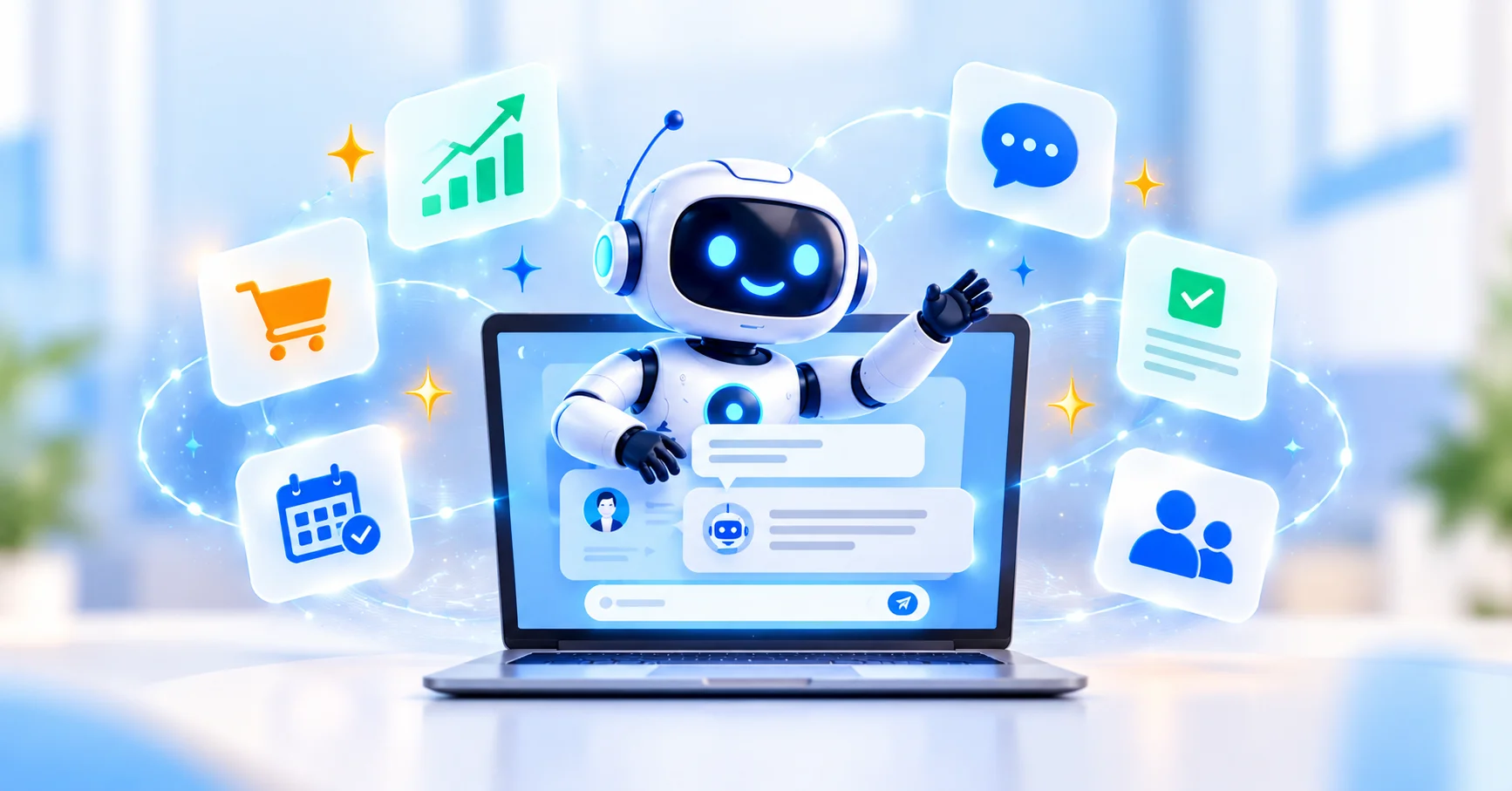
For years, corporate websites relied on static FAQ pages and rudimentary chat widgets to field customer inquiries. These early tools often frustrated users with rigid rule trees and canned responses that failed to solve nuanced problems. Today, digital engagement demands a smarter approach. Businesses need interactive solutions that understand context, resolve issues instantly, and guide visitors smoothly toward a conversion.
Modern web visitors expect immediate answers at any hour of the day. When a potential client lands on your site and encounters a dead end, they leave for a competitor within seconds. Upgrading to an AI website customer assistant changes this dynamic completely. These advanced systems handle complex dialogues, qualify leads automatically, and integrate with Conversational AI for enterprise websites to deliver 24/7 customer support automation.
The Shift from Rule-Based Widgets to Autonomous AI
Traditional chat tools operate on strict keywords and pre-written scripts. If a user types a phrase outside the programmed parameters, the widget breaks down and prompts the user to submit an email ticket. This creates friction at the exact moment a prospect is ready to buy.
Autonomous assistants leverage sophisticated natural language processing to comprehend intent rather than just matching exact words. They understand tone, context, and multi-turn conversations. Instead of forcing a user through a clumsy menu, an intelligent assistant holds a fluid conversation. It diagnoses user needs and serves precise information or direct product recommendations.
Furthermore, these systems operate independently while adhering strictly to your company knowledge base. They draw from product catalogs, pricing guides, and support documentation in real time. This ensures every interaction is accurate, up to date, and aligned with your brand guidelines.
Driving Real Conversions Through Smart Engagement
Deploying an AI customer assistant is not just about answering questions. It is about actively driving business growth. By engaging visitors the moment they show hesitation or high intent, these assistants remove buying barriers.
Consider how an autonomous agent influences the sales pipeline:
- Instant Lead Qualification: The assistant asks targeted discovery questions to assess a visitor’s budget, timeline, and specific pain points before routing qualified leads to your sales team.
- Proactive Interventions: By tracking user behavior on pricing or product pages, the assistant offers timely assistance or relevant case studies to keep the visitor engaged.
- Frictionless Scheduling: Instead of making prospects wait for a confirmation email, the assistant books meetings directly into your sales representatives’ calendars.
- Personalized Recommendations: Based on user inputs, the system highlights the exact services or products that match their requirements, shortening the sales cycle.
When companies partner with experienced providers like CAT Software Services Inc, they build custom AI integrations tailored to their unique operational models. Moving beyond generic out-of-the-box widgets ensures that the assistant supports specific conversion goals, whether that involves software subscriptions, enterprise consultations, or e-commerce checkouts.
Overcoming Integration and Security Hurdles
Many business leaders hesitate to adopt advanced AI tools due to concerns over data privacy, system integration, and maintenance overhead. Implementing an enterprise-grade assistant requires a structured approach to ensure security and reliability.
Your AI assistant must connect cleanly with existing customer relationship management software, enterprise resource planning platforms, and internal databases. Isolated chat tools create data silos that frustrate internal teams. Integrating the assistant directly into your tech stack allows it to pull live inventory data or update user records automatically.
Security remains another critical factor. Because these assistants handle sensitive client interactions, they must comply with industry standards and data protection regulations. Working with a dedicated technology partner ensures proper encryption, role-based access controls, and robust cloud orchestration. This safeguards proprietary data while delivering a smooth experience for the end user.
Frequently Asked Questions
What makes an autonomous AI assistant different from a standard chatbot?
Standard chatbots rely on rigid decision trees and predefined button clicks. Autonomous AI assistants use natural language understanding to interpret context, hold open-ended conversations, and execute multi-step workflows independently.
Can the AI assistant integrate with our existing CRM and software stack?
Yes. Modern custom AI solutions integrate smoothly with popular CRM platforms, databases, and custom web applications via secure application programming interfaces.
How does an AI assistant improve website conversion rates?
It eliminates wait times by answering questions instantly, proactively engaging high-intent visitors, qualifying leads in real time, and guiding users directly to checkout or consultation booking.
Is visitor data secure when interacting with an AI assistant?
When deployed through secure cloud architectures and compliant frameworks, customer interactions and data transmissions remain fully encrypted and protected against unauthorized access.
How long does it typically take to deploy a custom AI assistant?
Deployment timelines vary based on system complexity and integration requirements, but structured proof-of-concept projects often deliver working prototypes within a couple of months.
Building Your Scalable Digital Growth Engine
Implementing advanced conversational intelligence requires more than just embedding a script on your homepage. It demands careful architecture planning, secure API connections, and ongoing updates to match changing market demands. Building a reliable growth engine means aligning your digital tools with your broader business strategy from day one.
If you are ready to update your digital presence and turn passive website traffic into measurable revenue, CAT Software Services Inc can help. Our team specializes in custom software development, cloud solutions, and smart technology integration. Reach out to our experts today to discuss how we can build a scalable AI website customer assistant designed specifically for your enterprise.
