
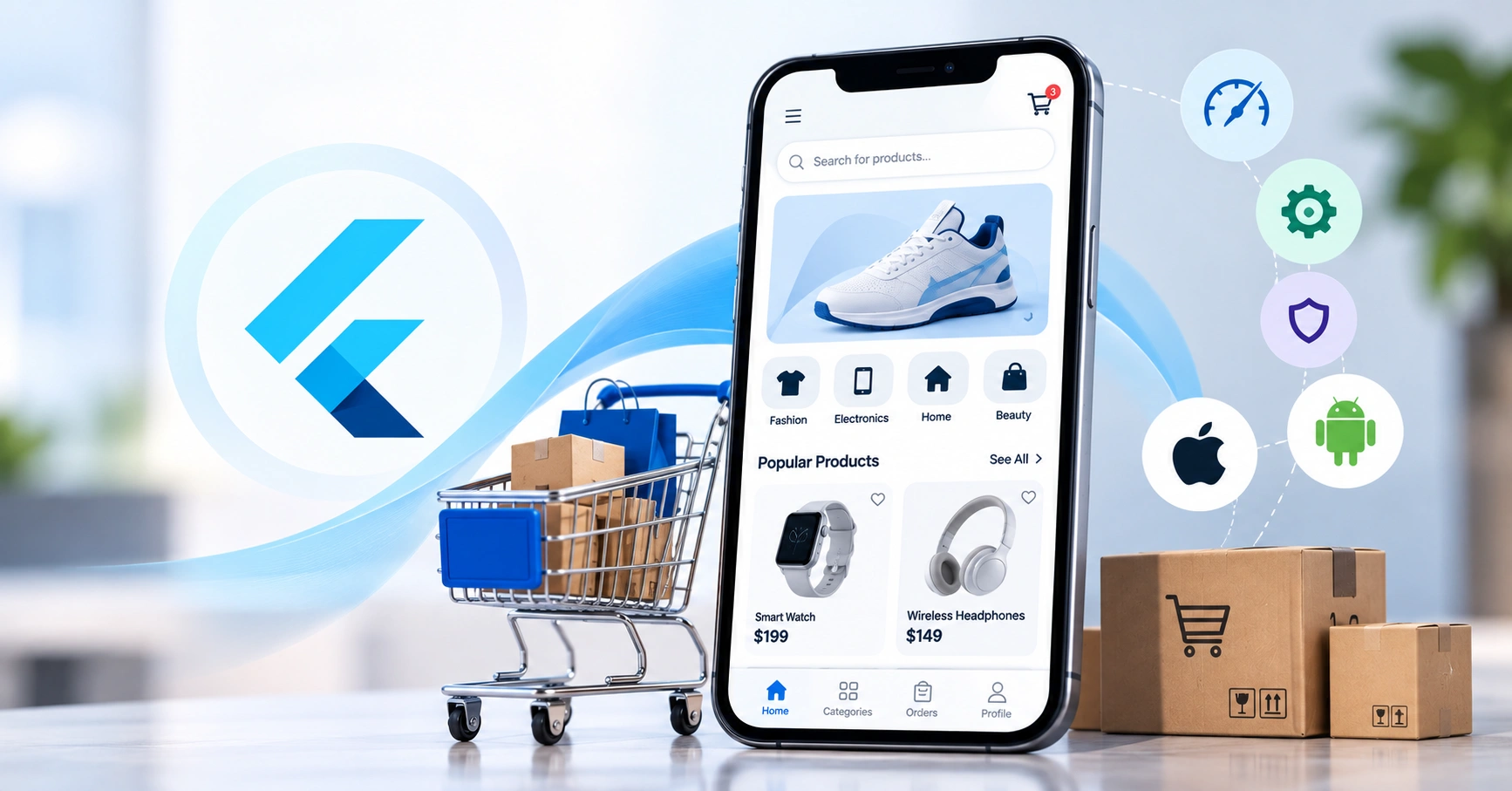
Modern retail brands operate under demanding mobile performance conditions. Consumers expect instant page loads, immediate checkout transitions, and responsive product catalogs. Engineering leaders must balance these high user expectations with development budgets, cross-platform maintenance, and strict release schedules.
Building separate native applications for iOS and Android often leads to duplicated work, higher operational expenses, and fragmented feature releases. Web-view cross-platform tools solved code duplication in the past, but they frequently struggled with rendering speed and native feel.
Flutter, Google’s open-source UI toolkit, resolves these architectural trade-offs for high-volume digital commerce. At CAT Software Services Inc., our engineering teams construct enterprise applications that run efficiently across multiple mobile operating systems. This technical overview breaks down why Flutter works so well for modern enterprise shopping platforms.
Native Speed Through Direct Hardware Rendering
Enterprise shopping applications require consistent frame rates during heavy interactions. Dropped frames during catalog navigation or cart adjustments break user immersion and reduce conversion metrics. Flutter handles rendering differently than older hybrid options.
Direct Machine Code Compilation
Flutter bypasses runtime interpretation and JavaScript bridges entirely. The framework compiles Dart code directly into native ARM or x86 machine instructions. Working alongside Google’s Impeller rendering engine, Flutter delivers target frame rates of 60 to 120 frames per second on modern displays. Heavy product grids, multi-layer filter menus, and animated transitions render smoothly without CPU spikes.
Precise UI Control via Canvas Drawing
Rather than wrapping native platform widgets or relying on web views, Flutter controls every pixel on screen using standard canvas APIs. Designers gain absolute authority over global brand components. Your mobile store maintains exact visual alignment on iOS and Android devices while avoiding layout breaks caused by mobile operating system updates.
Reduced Engineering Overhead and Faster Release Cycles
Speed to market gives retail organizations a real advantage over slower competitors. Flutter consolidates team workflows into a unified build pipelines, shortening iteration cycles.
Single Codebase Execution
Writing application logic once for both mobile ecosystems transforms team output and software maintenance schedules. This unified architecture gives product teams clear operational advantages:
- Controlled Development Costs: Shared code reduces duplicated team tasks across separate iOS and Android projects.
- Synchronized Release Schedules: Product launches and promotional updates go live simultaneously on both app stores.
- Simplified Quality Assurance: Automated test suites run against one central codebase, reducing total QA testing hours.
Rapid Feature Iteration via Hot Reload
Flutter includes Stateful Hot Reload, allowing developers to view code modifications instantly inside running applications without clearing state. When building custom payment flows or modifying product detail screens, developers make real-time adjustments. This feedback loop accelerates internal testing and shortens project build schedules.
Modular Architecture and Backend Compatibility
Enterprise retail software never runs in isolation. A modern mobile store connects directly to existing backends, databases, fulfillment networks, and payment gateways.
Backend and Hardware Integrations
Flutter communicates cleanly with standard REST and GraphQL endpoints. Using native platform channels, developers execute low-level mobile APIs directly. This capability enables rapid connection to device features:
- Biometric user login via Face ID or fingerprint sensors.
- Barcode and NFC hardware scanning for store inventory lookup.
- Native system push notification services for promotional messages.
State Management for Large SKU Catalogs
Large retail platforms process complex inventory streams, real-time pricing updates, and personalized user profiles. Flutter patterns like BLoC (Business Logic Component) and Provider isolate business logic from presentation views. This strict separation keeps codebases clean and accessible as user traffic increases over time.
Security Practices for Mobile Commerce
Retail apps handle protected financial data, personal identities, and payment records. Protecting digital assets requires strong security measures across every application layer.
Because Dart source code compiles down to raw binary machine code, reversing engineering a Flutter application binary requires significantly more effort than inspecting web-based hybrid apps. Engineering teams pair this default protection with standard enterprise security protocols:
- PCI-Compliant Payment Flows: Routing credit card details through native SDKs via secure platform bridges.
- Encrypted On-Device Storage: Storing access tokens and user credentials inside hardware-backed keychains.
- Protected Network Communications: Implementing SSL certificate pinning to block man-in-the-middle network interception.
FAQs
Yes. Flutter is backed by Google and supported by an active global developer community. Thousands of major corporations rely on Flutter for mission-critical applications that process millions of daily transactions safely.
Flutter compiles straight into native machine code. Outside of specialized system tasks like background file processing, users experience identical responsiveness, smooth scrolling, and rapid load times when compared to native Swift or Kotlin apps.
Yes. Flutter operates as a presentation layer that interacts with any modern backend. It connects seamlessly to SAP, Microsoft Dynamics, Salesforce, and custom REST or GraphQL APIs.
No. Platform channels allow developers to write custom native Swift, Kotlin, or C++ code whenever needed. You retain complete access to native operating system features alongside your primary codebase.
While exact figures depend on project scope, maintaining one unified codebase often cuts overall development hours and engineering resource costs by 30 to 40 percent compared to building two standalone native applications.
Scaling Your Digital Commerce Capability
Selecting a mobile app architecture determines how fast your organization can adapt to market changes. Flutter provides an effective blend of high rendering performance, multi-platform consistency, and reduced maintenance costs. It remains a reliable choice for enterprise brands expanding their digital retail channels.
At CAT Software Services Inc., we help companies build dependable software, modernize legacy platforms, and deploy custom mobile solutions. Our experienced engineering teams work closely with your organization to build secure applications aligned with clear technical requirements.
Planning your next mobile commerce project? Reach out to the technical team at CAT Software Services Inc. to discuss your mobile app architecture strategy.
